Scope
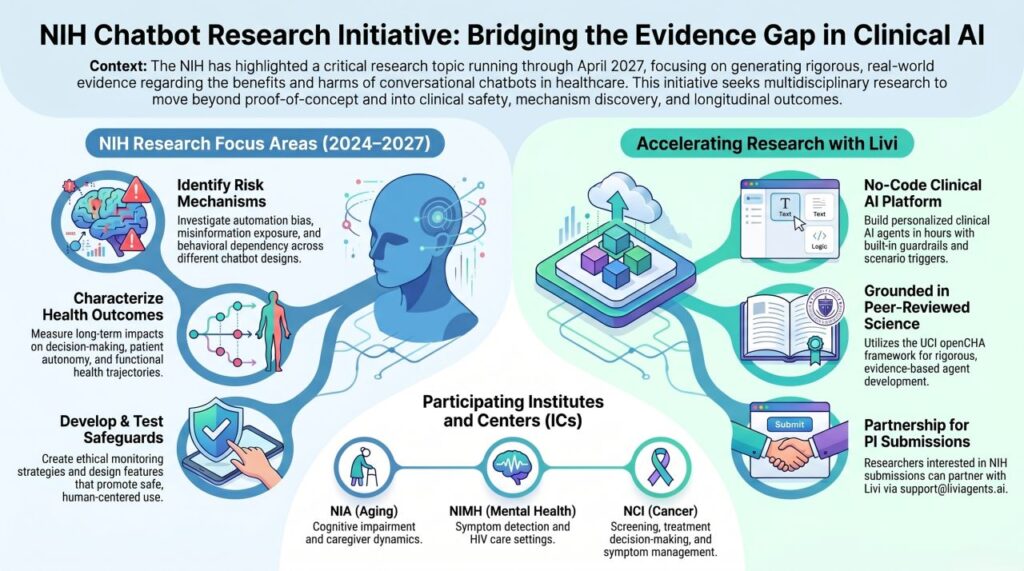
The National Institutes of Health (NIH) has introduced a new highlighted topic focusing on the rapidly expanding integration of conversational chatbots into daily life and health-related contexts. This initiative encourages multidisciplinary research to identify, measure, and explain the benefits and harms of chatbot use—whether as specific interventions or routine use—across various populations, settings, and use cases. The goal is to move beyond proof-of-concept studies to understand causal mechanisms, safety, and health impacts.
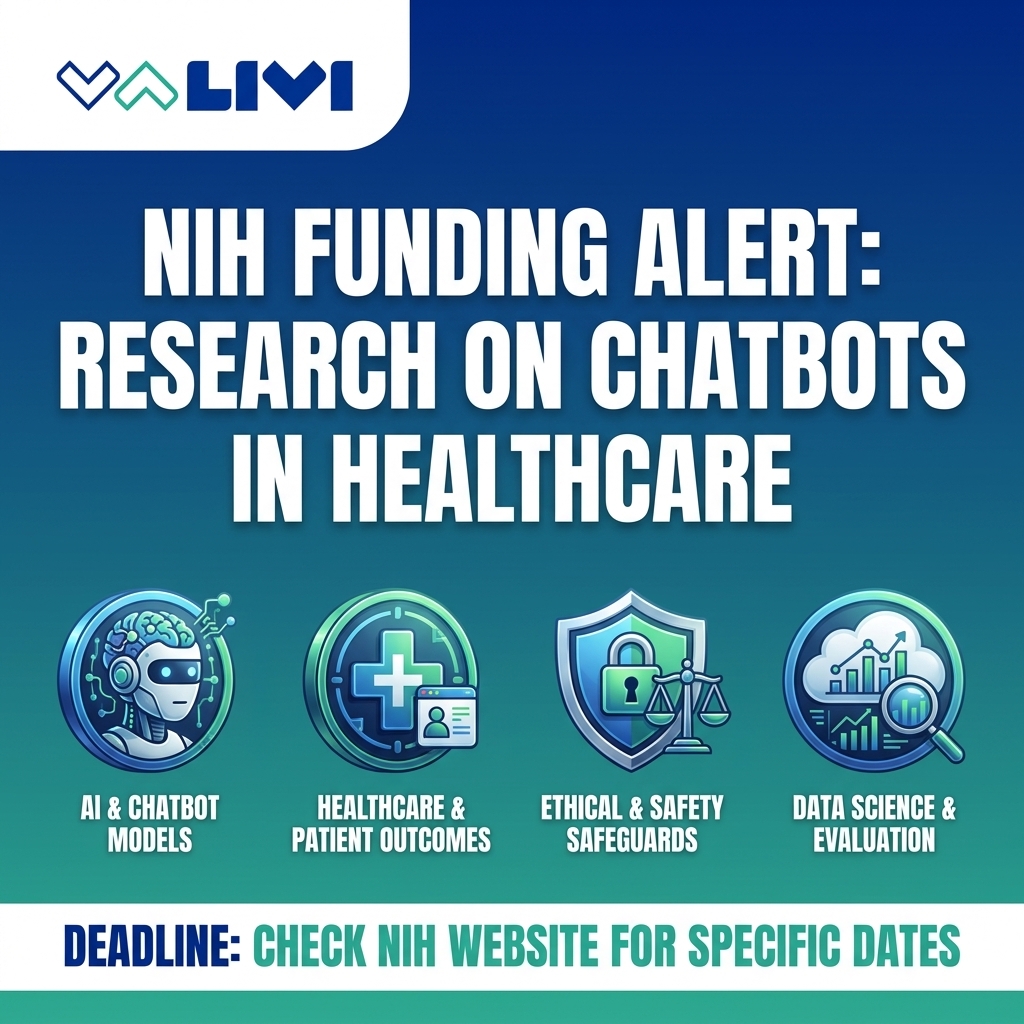
- Identify risk mechanisms such as automation bias, persuasive effects, and misinformation exposure.
- Compare safety and performance across different chatbot models.
- Examine impacts on decision-making, autonomy, and help-seeking behaviors.
- Develop and test safeguards to promote safe, ethical, and secure use.
Eligibility
Investigators should apply through an appropriate NIH Parent Funding Announcement or another broad NIH opportunity available on Grants.gov. Studies should emphasize methodological rigor, appropriate comparators, and real-world relevance. Any resulting literature and data sharing must align with the highest scientific standards, ensuring that findings are published as academic peer-reviewed articles.
Partnership
Multiple NIH Institutes, Centers, and Offices (ICOs) are participating, including the National Institute on Aging (NIA), National Cancer Institute (NCI), National Institute on Drug Abuse (NIDA), National Institute of Mental Health (NIMH), and others. Each ICO has specific areas of interest ranging from clinical decision support in cancer care to mitigating cognitive impacts in older adults.
Deadlines: The highlighted topic expires on April 15, 2028. Check specific Parent Announcements for application due dates.
If you’re a 𝗣𝗜 𝗰𝗼𝗻𝘀𝗶𝗱𝗲𝗿𝗶𝗻𝗴 𝗮 𝘀𝘂𝗯𝗺𝗶𝘀𝘀𝗶𝗼𝗻, we’d love to partner. Email support@liviagents.ai.