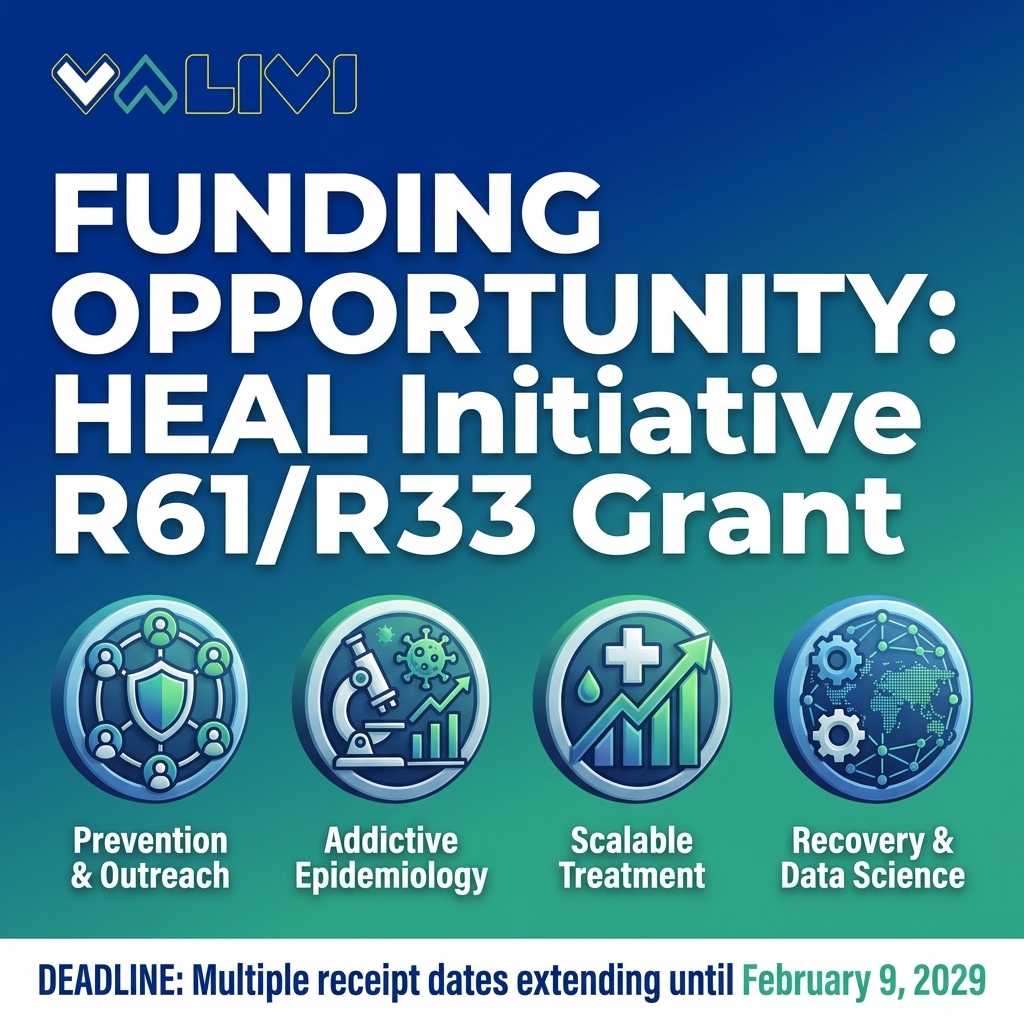
The National Institutes of Health (NIH) has released a critical funding opportunity (RFA-DA-27-016) under the HEAL Initiative. This program is designed to bridge the gap between discovery and routine application in addiction epidemiology, prevention, treatment, and recovery services. By focusing on practical implementation, this grant aims to combat the opioid crisis through action-oriented studies that accelerate the adoption of evidence-based interventions in everyday clinical, public health, and community systems.
As implementation science research indicates, accelerating the integration of evidence-based practices into routine care is essential for improving public health outcomes, particularly in addiction and pain management (Proctor et al., 2009, Implementation Science).
Scope
This initiative prioritizes approaches that are highly replicable and scalable. Reviewers will look for models that can be reproduced across different settings rather than those isolated to a single niche program. Research can occur at multiple levels, including individual, provider, organizational, community, or broader systems levels. A distinct priority is also given to the translation of research relevant to chronic pain comorbid with substance use.
Eligibility
This opportunity is open to a wide array of domestic entities. Non-domestic (foreign) organizations are not eligible to apply, though foreign components are allowed.
Partnership
The NOFO encourages methodologies that foster collaboration between researchers and decision-makers at various levels (clinical, health system, public health, or policy). Partnerships that actively reduce the gap between evidence and implementation by consistently embedding interventions into systems of care will be highly valued.
- Action-oriented research translating addiction and recovery findings into practice.
- Focus on replicable, scalable models suitable for diverse settings.
- Inclusion of strategies for chronic pain comorbid with substance use.
- Methodological flexibility, including data science and implementation science approaches.
Deadlines: Multiple receipt dates through February 9, 2029.
Stay updated on the latest health tech funding: https://newsletter.livi.health/signup