Continuous stress monitoring through wearable devices is revolutionizing personal health. However, a major challenge remains: user burden. Frequent prompts and high-frequency data collection often lead to survey fatigue and device abandonment. A new peer-reviewed study addresses this by implementing an innovative artificial intelligence framework.
Methodology
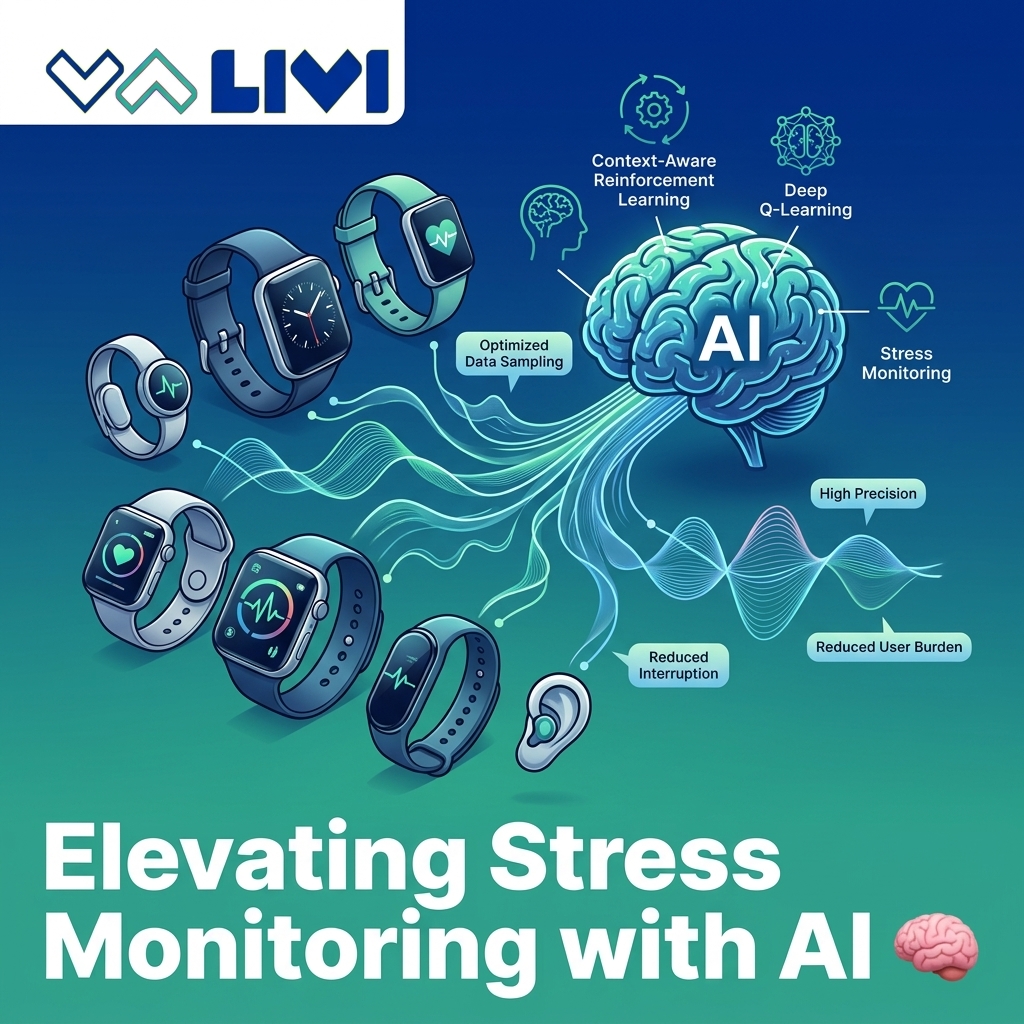
The researchers developed a Context-Aware Reinforcement Learning model utilizing Deep Q-Learning (DQN). Instead of relying on static data collection rules, this advanced system dynamically adapts to the user’s real-time context. By intelligently predicting when data or user input is actually necessary, the algorithm minimizes continuous sampling without losing critical health signals.
Findings
The application of DQN yielded impressive results. The context-aware approach maintained highly accurate Stress Detection metrics while drastically lowering the frequency of required user interactions. The system effectively learned the optimal balance between predictive accuracy and data collection costs.
Impact
This breakthrough paves the way for a Reduced User Burden in wearable health tech. By making smart devices truly intelligent, we can ensure long-term user compliance and more reliable longitudinal health data, ultimately improving mental health interventions.
Authors: Research Team (See full publication for complete author list)
This research was powered by the Livi Platform.
Full paper available here: https://www.sciencedirect.com/science/article/pii/S2352648324000217
Join our network for deeper insights: https://newsletter.livi.health/signup